A scene from your world
Something slow
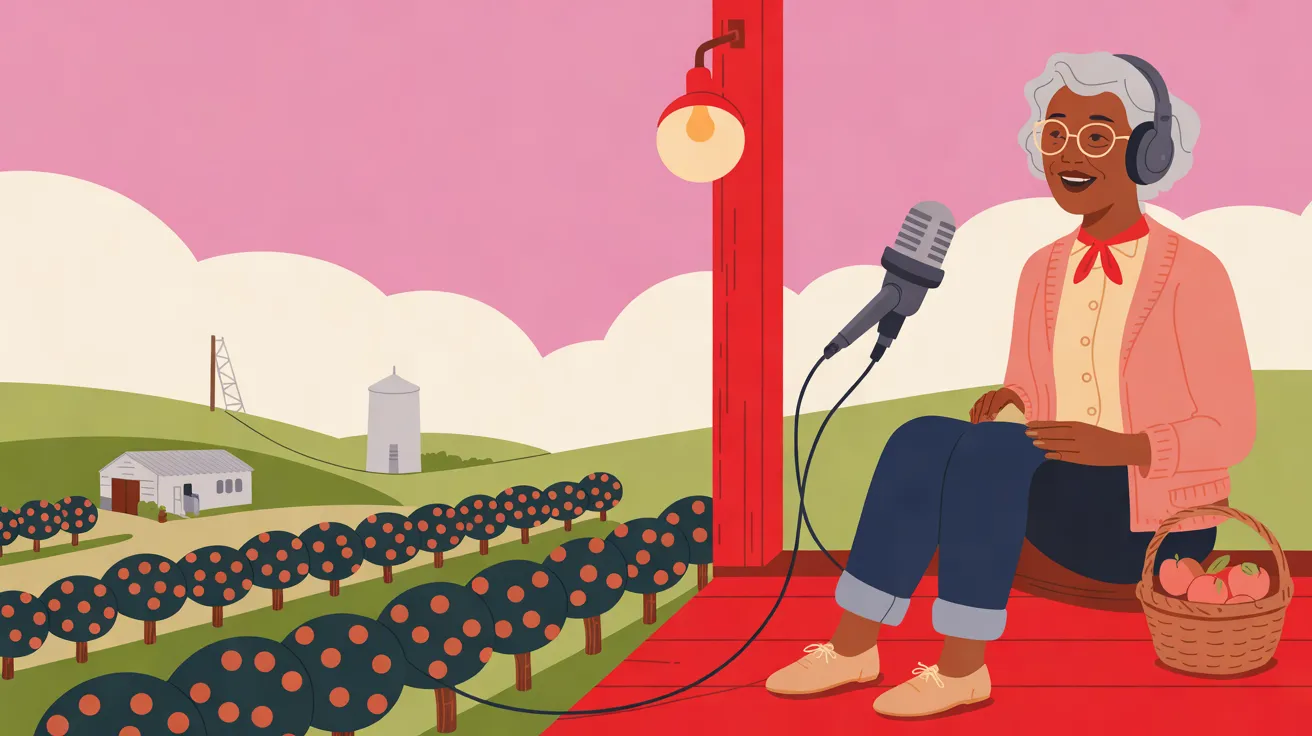
At a quarter to seven the light comes down the long row sideways, the way it only does in late summer, and lies gold on every peach between the porch and the packing shed. The Porch Broadcaster is already on the swing: microphone on its long cord across her knees, headphones around her neck, reading glasses up in her hair, where she will spend the next hour looking for them. She reaches over and gives the red bulb on the porch post a quarter turn. It comes on. So does the town.
“Evening. This is the porch, and you’re not alone out there.” She says it the same way every night, and every night the swing creaks on the same word. Down the hill, in kitchens and truck cabs and the cool dark of the packing shed, radios go up a notch. She does the peach report first, row by row, as if reading out names: the old trees at the top are done, the middle of the row wants two more days, and the one by the water tower is showing off again.
Then the jar. Folded notes from the porch rail, read out one at a time. A birthday for somebody turning ninety. A dog named Biscuit, brown, answers to nothing, last seen heading for the creek. A request for “something slow” from a name she doesn’t know, which is rare enough that she reads it twice. She talks between every note, because that is the job, and because in all these years she has never once let the air go quiet. Silence on the radio sounds like something went wrong.
The sun touches the ridge. This is the part of the broadcast the town likes most and could not explain: the swallows start working the top of the long row, the shadows of the trees reach the porch steps, and the whole orchard goes the color of the inside of a peach. She lifts the microphone to say so. She has the sentence ready. It is a good one.
Then she doesn’t. Somebody asked for something slow. She holds the microphone out past the porch rail, toward the long row, and leaves it there. Thirty seconds of orchard go out over the air: the swing chains, a screen door somewhere down the hill, a peach letting go of its branch and landing in the grass with a sound like a soft knock. In a truck cab with the engine off, a man doesn’t touch the dial. In the packing shed, nobody says a word.
When she brings the microphone back, her voice is lower than usual. “That was the long row,” she says, “for whoever asked.” She finds her glasses, finally, on her head, and folds the note back into the jar for tomorrow. The red bulb stays lit until the last of the light is off the ridge. Then she reaches up and turns it off, and the porch goes off the air, and the town goes in to supper.